

What You Need to Know About Oil Rig Jobs in 2026
Oil rig jobs are some of the most well-paid, adventurous, and in-demand roles in the global energy sector. Here’s a quick snapshot of what to expect:
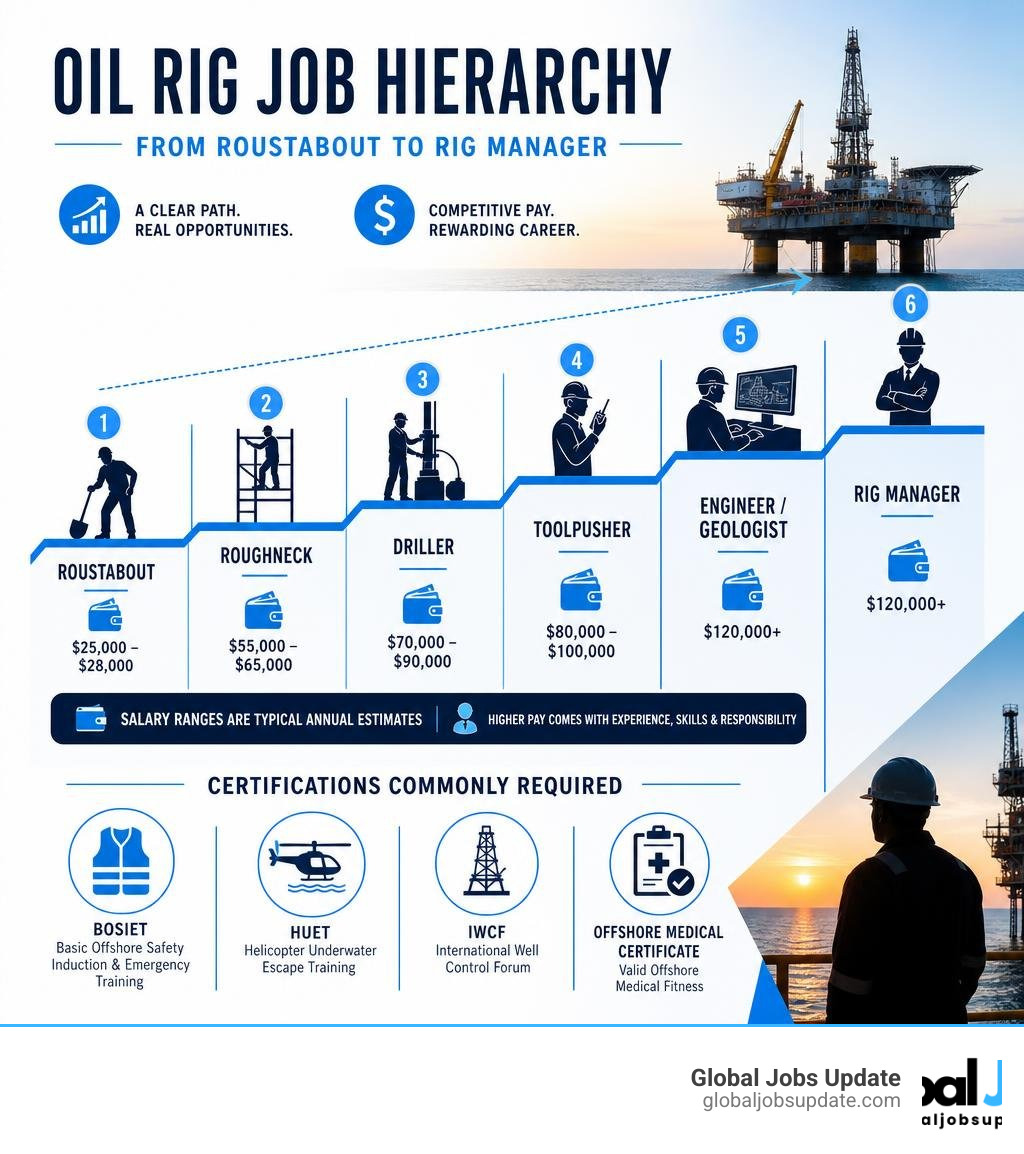
| Role | Experience Level | Typical Annual Salary |
|---|---|---|
| Kitchen Assistant / Potwasher | Entry-level | ~$25,000 |
| Roustabout / Scaffolder | Entry-level | $25,000 – $28,000 |
| Roughneck | Entry-level / Mid | $55,000 – $65,000 |
| Driller | Mid-level | $70,000 – $90,000 |
| Toolpusher | Mid-level | $80,000 – $100,000 |
| Engineer / Geologist | Specialized | $120,000+ |
Work schedule: Most roles follow a 2 weeks on, 2 weeks off rotation — or up to 28 days on for deepwater positions.
Certifications needed: BOSIET, HUET, IWCF, and a valid offshore medical certificate are commonly required.
How to get started: No experience? Entry-level roles like roustabout, painter, or kitchen assistant are the most accessible starting points.
Whether you’re considering a career change or just curious about life on the water, the offshore oil and gas industry offers a clear path from entry-level work all the way to senior management — with competitive pay and unique perks at every stage.
I’m Weldon Keni, a career content specialist with over 8 years of experience analyzing global labor markets and helping job seekers break into high-demand industries — including oil rig jobs across the Gulf of Mexico, the North Sea, and beyond. In this guide, I’ll walk you through exactly why this career path deserves serious consideration in 2026.
8 Undeniable Reasons Why Oil Rig Jobs Are Worth It
For decades, working on an offshore platform has been viewed as a high-stakes, high-reward path. In 2026, the appeal has only grown as the energy industry integrates advanced safety systems and modernized living facilities. If you are looking for a career that offers financial independence, rapid progression, and unmatched time off, here are eight undeniable reasons why oil rig jobs are worth the investment.
First and foremost is the financial security. Very few industries allow individuals with minimal formal education or previous experience to step into a starting salary that covers all basic living expenses during working hitches. Second, the rotation schedules provide blocks of completely uninterrupted free time, allowing you to travel, spend time with family, or pursue personal hobbies.
Furthermore, the global nature of energy production means your skills are highly transferable. Whether you are working in the North Sea or on a deepwater project off the coast of the Netherlands, your certifications and experience speak a universal language. Coupled with the rapid career progression, comprehensive benefits, cutting-edge technology, a tight-knit community, and diverse roles for every skill set, it is easy to see why so many professionals choose this lifestyle.
To fully understand how these components come together to create a highly rewarding career, you can read more about schedules and compensation.
1. Lucrative Compensation and 2026 Salary Projections
When it comes to oil rig jobs, the financial reward is often the initial hook. Because of the remote working environments and the specialized nature of the work, companies are willing to pay a premium for dedicated talent.
In 2026, salary projections remain exceptionally strong across all experience levels. Entry-level roustabout positions on offshore oil rigs typically earn between $50,000 and $60,000 annually, though some entry-level offshore oil rig positions can offer starting figures ranging from $25,000 to $30,000 per year depending on the region and specific support role (such as kitchen or maintenance assistants).
As you transition to mid-level roles, the compensation climbs rapidly. Mid-level roles such as drillers and toolpushers earn between $70,000 and $100,000 per year. For those who pursue specialized paths, the financial ceiling is incredibly high; specialized positions like engineers and geologists on oil rigs often exceed $120,000 in annual earnings.
| Experience Level | Job Titles | 2026 Projected Salary Range |
|---|---|---|
| Entry-Level Support | Kitchen Assistant, Painter, Potwasher, Seaman | $25,000 – $30,000 |
| Entry-Level Technical | Roustabout, Scaffolder, Floorhand | $50,000 – $60,000 |
| Mid-Level Crew | Roughneck, Derrickhand, Motorhand | $55,000 – $65,000 |
| Advanced Operations | Driller, Assistant Driller, Welder | $70,000 – $90,000 |
| Rig Management | Toolpusher, Rig Manager, Barge Engineer | $80,000 – $100,000 |
| Specialized Technical | Offshore Engineer, Well Geologist, HSE Officer | $120,000+ |
This structured earning potential ensures that your hard work translates directly into financial growth. If you are ready to explore these high-paying paths, you can explore global offshore drilling careers on Global Jobs Update.
2. Unmatched Work-Life Balance and Rotation Schedules
One of the biggest misconceptions about working offshore is that you will never have a personal life. In reality, the rotation schedules offer a level of work-life balance that standard 9-to-5 corporate employees can only dream of.
The industry standard for offshore operations is built around rotation patterns. The most common is the “two weeks on, two weeks off” schedule. During your two weeks on the rig, you will work 12-hour shifts daily, fully focused on operations. However, the moment your hitch ends, you are flown back to shore for two full weeks of complete freedom.
For deepwater vessels and international operations, 28-day hitches (four weeks on, four weeks off) are also highly common. This means you only work six months out of the entire year. The time off is truly yours — no work emails, no unexpected calls from the boss, and no daily commutes. This structure makes it incredibly easy to travel the world, spend quality time with loved ones, or invest in personal development projects.
3. Rapid Career Progression and Skill Development
The offshore oil and gas sector is a true meritocracy. If you show up with a strong work ethic, a willingness to learn, and a commitment to safety, you can climb the ranks faster than in almost any other industry.
Many rig managers and toolpushers in 2026 started their careers sweeping the decks as entry-level roustabouts. The natural progression on the drill floor moves from Roustabout to Roughneck (Floorhand), then up to Derrickhand, Assistant Driller, and finally Driller or Toolpusher.
Along the way, companies invest heavily in your training. You will receive hands-on technical training, learn how to operate heavy hydraulic machinery, and develop deep expertise in safety systems. If you want to expand your technical capabilities early on, you can learn how to start your career in coil tubing operations to add highly sought-after technical skills to your resume.
4. Comprehensive Benefits and All-Inclusive Living
When you work on an offshore oil rig, your cost of living drops significantly. Because you are living on the platform during your hitch, the operating company covers virtually all of your daily expenses.
- Free Accommodation & Meals: You will live in comfortable, modern living quarters with fully catered, high-quality meals provided daily by professional kitchen staff.
- Travel Expenses Covered: Companies typically pay for your helicopter transfers and flight tickets from designated hubs directly to the rig.
- Comprehensive Health Coverage: Full-time offshore workers receive robust health, dental, and life insurance packages.
- Retirement & Savings: Many major operators offer attractive retirement plans, including competitive company matches (such as a 401k match up to 4% after a short service period).
By having your food, housing, and travel completely paid for half the year, you can save a massive portion of your income, helping you reach your financial goals much faster.
5. Global Travel Opportunities
Because energy demand is global, oil rig jobs are your ticket to seeing the world. Offshore platforms operate in major maritime basins across the globe.

For European workers and international contractors, the North Sea is a massive hub of activity. If you are looking to base your career in a region known for its high safety standards and excellent working conditions, you can explore oil and gas jobs in the Netherlands or check out additional listings to search oil & gas jobs in Europe.
If you are open to traveling further afield to warm climates, you can also look into international opportunities by reading our tips for landing oil rig jobs in Qatar.
6. Working with Cutting-Edge Technology and Safety Systems
Modern offshore rigs are not the gritty, low-tech environments of the past. Today, they are highly automated marvels of engineering.
Working offshore in 2026 means collaborating with artificial intelligence, automated drilling cyber-chairs, and advanced predictive maintenance software. These technologies are designed to take human workers out of harm’s way and streamline operations.
Safety is the absolute cornerstone of modern rig operations. Health, Safety, and Environment (HSE) engineers use real-time sensor data to monitor rig conditions and prevent incidents before they can occur. To understand how safety roles have evolved alongside this technology, check out these 10 shocking things you probably don’t know about HSE engineer jobs in oil and gas.
7. Strong Sense of Community and Teamwork
Living and working in close quarters on an offshore platform fosters an incredibly strong sense of community. On a rig, crews operate under a “One Team” philosophy. Because everyone’s safety relies on the person next to them, a shared safety-conscious mindset is deeply ingrained in the culture.
You will work, eat, and relax alongside colleagues from diverse backgrounds, forming tight bonds and lifelong friendships. The camaraderie built during a tough, productive hitch is a unique aspect of offshore life that many workers say they miss the most when they eventually retire or transition to onshore roles.
8. Diverse Roles for Every Skill Set
You do not need to be a drilling expert to find a place on an offshore rig. Rigs are floating cities that require a massive variety of professional skills to keep running smoothly.
If you have a background in a traditional trade, you can find highly lucrative positions. For instance, you can look into welding jobs on oil rigs to see how specialized structural skills are applied offshore.
Alternatively, if you have a mechanical or electrical background, you can work as an offshore technician maintaining critical engine room equipment, top drives, and hydraulic systems. To learn more about these technical paths, you can explore opportunities for offshore industry technicians to see how your skills translate to the marine environment.
Essential Certifications, Training, and Rig Types
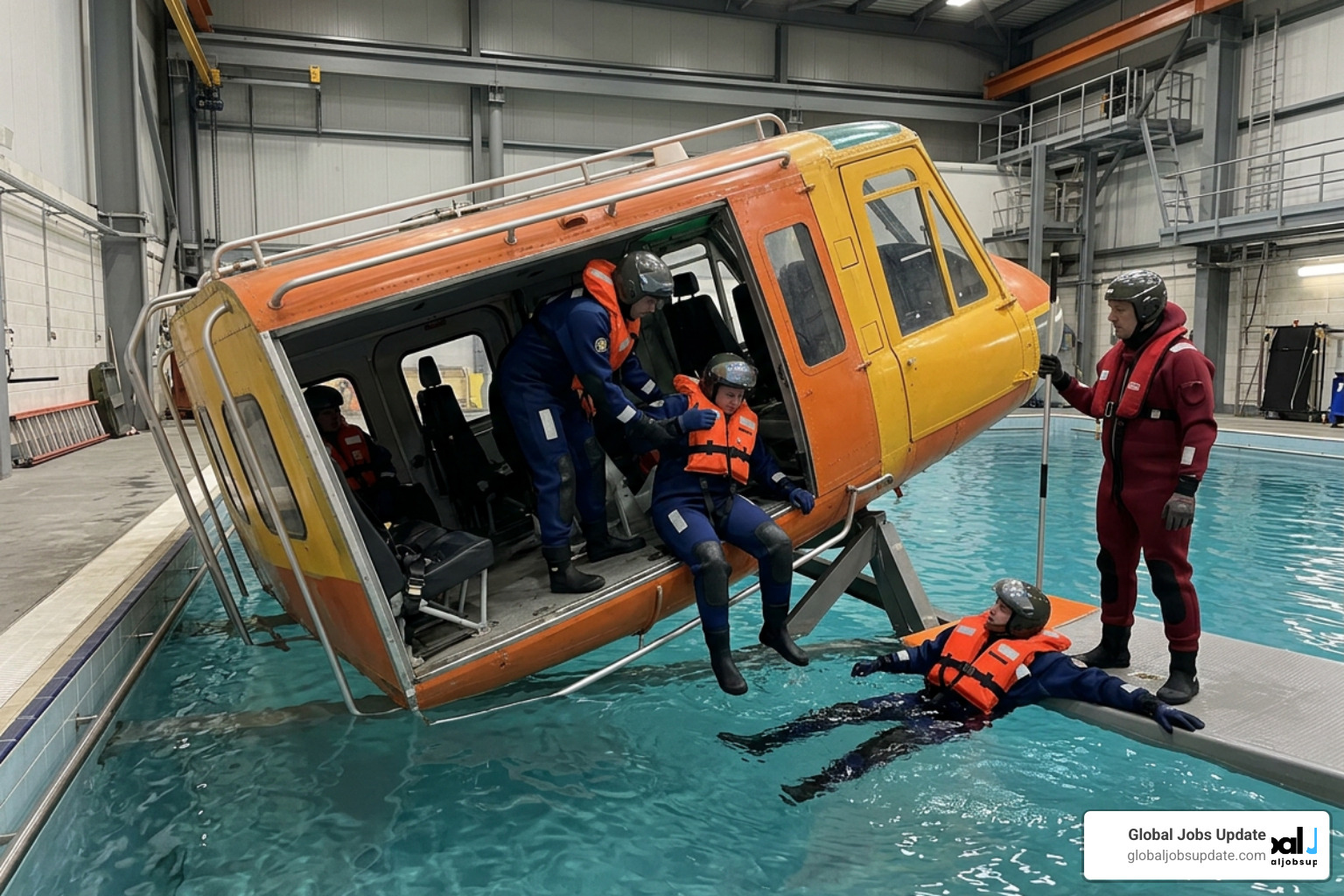
Before you can set foot on a helicopter bound for an offshore platform, you must obtain specific safety and technical certifications. These standards ensure that every crew member is fully prepared for the offshore environment.
- BOSIET (Basic Offshore Safety Induction and Emergency Training): This is the gold standard for offshore work. It covers safety induction, helicopter survival (including emergency breathing systems), fire fighting, self-rescue, and first aid. You can verify offshore training standards through OPITO, the global skills body for the energy industry.
- HUET (Helicopter Underwater Escape Training): Often part of the BOSIET, this specialized course teaches you how to safely exit a helicopter that has ditched in the water.
- IWCF (International Well Control Forum): Required for personnel directly involved in drilling and well-intervention operations to ensure safe pressure control. You can learn more about well control certification through the International Well Control Forum.
To understand how these qualifications fit into long-term career planning, you can research oil rig jobs and global offshore drilling careers or look at current openings and qualification requirements for offshore roles.
Entry-Level Oil Rig Jobs for Beginners
If you are starting from scratch, you do not need a degree in petroleum engineering. Rigs require support personnel to manage daily logistics, maintenance, and hospitality.
Common entry-level positions include Roustabouts (general laborers who handle deck cargo and paint surfaces), Kitchen Assistants, Painters, and Boiler Operators. These roles allow you to get your foot in the door, adapt to the offshore lifestyle, and earn a steady income while observing the technical operations of the drill floor. For a step-by-step roadmap on starting from zero, check out our slick starts guide to jobs in the oil field with no experience.
How to Land Oil Rig Jobs with No Experience
Breaking into the industry requires strategy. First, ensure your resume highlights any manual labor, mechanical, or teamwork-focused experience you have. Second, obtain your basic safety certifications (like BOSIET) independently if possible, as this makes you a much more attractive candidate to recruiters who want to avoid upfront training costs.
Additionally, don’t overlook land-based roles as a stepping stone. Gaining experience on land-based projects can make your transition to offshore platforms much smoother. You can check out onshore drilling rigs opportunities to see how onshore experience can help build your resume.
Understanding Jack-Ups, Semi-Submersibles, and Drillships
Offshore rigs are not all the same. Depending on the depth of the water and the stage of drilling, you might find yourself working on one of three main types of vessels:
- Jack-Up Rigs: These are mobile platforms with long legs that can be lowered to the seafloor. They are typically used in shallower waters, such as the southern North Sea.
- Semi-Submersible Rigs: These floating structures are partially submerged to provide incredible stability in rough, deep waters. They are anchored to the seafloor or kept in place using dynamic positioning systems.
- Drillships: These are maritime vessels outfitted with a drilling derrick. They are highly mobile and designed for exploratory drilling in ultra-deep waters.
To see which vessels currently have active crew vacancies, you can visit our dedicated category page to browse offshore rig jobs on Global Jobs Update.
Frequently Asked Questions About Offshore Careers
Are oil rig jobs dangerous?
While working with heavy machinery in remote marine environments carries inherent risks, modern offshore rigs are highly regulated. Strict safety protocols, such as the “Permit to Work” (PTW) system, ensure that no maintenance or operational task is performed without thorough hazard analysis. If you want to understand the rigorous safety expectations on a modern rig, read our list of 10 dos and don’ts for HSE jobs in oil and gas.
What are the physical and mental challenges of working offshore?
Offshore work is physically demanding and requires excellent stamina to handle 12-hour shifts in varied weather conditions. Mentally, the primary challenge is the isolation of being away from family and friends during your rotation. However, modern rigs offer excellent recreational facilities, including gyms, cinemas, and high-speed internet access to help workers stay connected with home.
What is the difference between onshore and offshore rig jobs?
Onshore rig jobs are located on land, meaning you can often drive home or stay in nearby crew camps at the end of your shift. Offshore rig jobs require living on a floating platform or vessel, meaning you remain on-site for the duration of your rotation. To learn more about safety and environmental careers across both onshore and offshore environments, you can look into smart ways to find health and safety jobs in oil and gas.
Conclusion
Working on an offshore oil rig is more than just a job — it is a lifestyle choice that offers spectacular financial rewards, rapid professional growth, and half the year off to live life on your own terms. Whether you are starting as an entry-level roustabout or stepping into a technical engineering role, the offshore industry in 2026 continues to provide unmatched career security and adventure.
At Global Jobs Update, we update our listings in real time to ensure you have immediate access to the latest vacancies in the energy sector. If you are ready to take the next step toward an exciting and lucrative offshore career, explore the latest oil and gas drilling rig jobs on Global Jobs Update today!
