
The Real Truth About Jobs in the Oil Field with No Experience
If you’re looking for jobs in the oil field with no experience, here’s the short answer: they exist, they pay well, and you can land one faster than you think.
Here are the most common entry-level oil field jobs that require little to no prior experience:
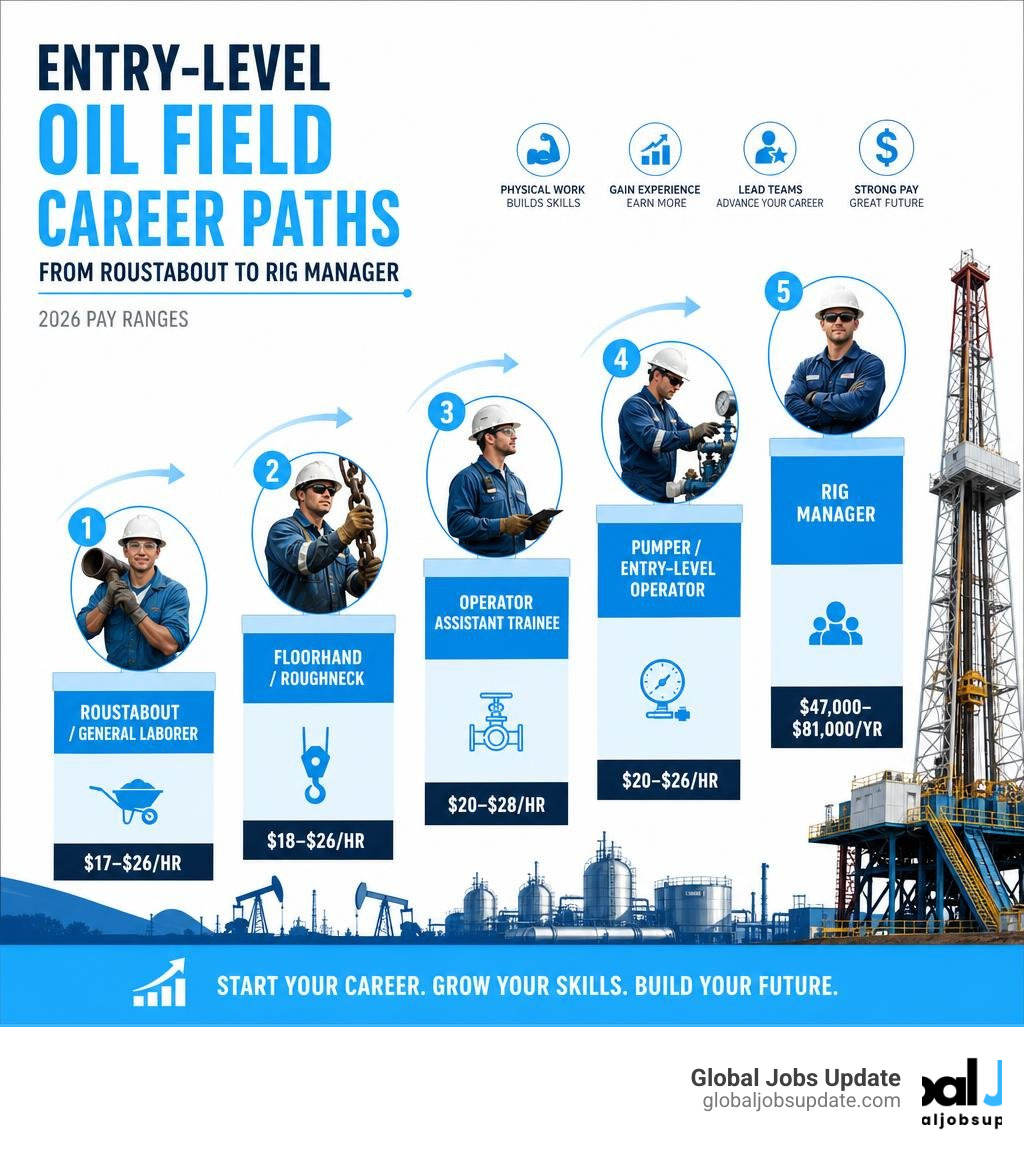
| Job Title | Average Pay | Key Requirement |
|---|---|---|
| Roustabout / General Laborer | $17–$26/hr | Physical fitness, driver’s license |
| Floorhand / Roughneck | $18–$26/hr | Age 18+, ability to lift 50–60 lbs |
| Operator Assistant Trainee | $20–$28/hr | High school diploma, clean driving record |
| Pumper / Entry-Level Operator | $20–$26/hr | Valid driver’s license, age 18+ |
| Camp Support (Kitchen, Laundry) | $17–$23/hr | Reliability, no experience needed |
The oil and gas industry is one of the few sectors where a high school diploma and a strong work ethic can get you in the door — earning $47,000 to over $81,000 a year within your first few years.
No degree. No trade certification. No connections required.
The industry has long welcomed newcomers. Entry-level workers in Texas alone can earn between $17 and $57 per hour, depending on the role and location. And with over 400 no-experience oil and gas jobs currently listed in the United States, the doors are wide open right now.
I’m Weldon Keni, a career content specialist and labor market analyst who has spent over 8 years helping job seekers navigate high-paying industries — including tracking jobs in the oil field with no experience across North America’s most active hiring markets. In the guide below, I’ll walk you through everything you need to know to get hired, get paid, and grow fast in this industry.
What Are the Best Jobs in the Oil Field with No Experience?

When you are looking to break into the oil and gas sector, the sheer variety of job titles can feel overwhelming. However, most companies organize their entry-level crews into clear, structured roles. Understanding these roles is your secret weapon to tailoring your application and standing out to hiring managers.
Let’s break down the primary starting points for anyone looking for jobs in the oil field with no experience.
Floorhand and Roughneck Roles
The floorhand (often called a roughneck) is the beating heart of the active rig floor. If you enjoy highly physical, work where no two days are the same, this is the job for you.
Your main responsibilities will include:
- Assisting with rig moves, which involves assembling and disassembling massive steel structures.
- Handling, connecting, and guiding heavy drill pipes on the rig floor.
- Maintaining and cleaning rig equipment, including the blowout preventer (BOP) system.
- Learning from the derrickhand and driller to ensure the entire operation runs safely and efficiently.
While this role is physically demanding, it is also one of the fastest paths to promotion. Many companies offer structured apprentice pathways, such as Operator Assistant Trainee roles, where you are paid to learn the ropes.
Roustabout and General Labor Jobs in the Oil Field with No Experience
If you want to get your foot in the door but aren’t quite ready to jump straight onto the active rig floor, starting as a roustabout is an excellent alternative. Roustabouts are the ultimate utility players of the oil field.
In this role, you will focus on:
- General site maintenance, including clearing brush, painting, and keeping the job site organized.
- Loading and unloading heavy equipment, tools, and supplies from transport trucks.
- Cleaning mud tanks, pipes, and machinery using high-pressure hoses and specialized cleaning solutions.
- Assisting specialized technicians with basic mechanical repairs.
Starting as a roustabout helps you build a solid foundation of industry-specific safety standards. For more ideas on how to leverage a strong work ethic into a rewarding career, check out our guide on Entry Level General Labor Jobs for the Total Newbie.
Operator Assistant Trainees and Pumpers
For those interested in the technical and mechanical side of energy production, operator assistant and pumper roles are fantastic entry points. These positions focus more on monitoring systems, logistics, and data collection rather than pure manual labor.
- Operator Assistant Trainees (Wireline, Slickline, Logging & Perforating): In these roles, you will assist in rigging up and rigging down specialized high-pressure equipment at the well site. You will learn to assemble electric, sonic, and nuclear logging tools. Major global employers offer fantastic entry-level opportunities in this space. For example, you can explore the Operator Assistant Trainee – Wireline Logging & Perforating at Halliburton or check out the Prudhoe Bay: Operator Assistant Trainee – Slickline Job Details | Halliburton . If you are looking for Texas-based training, the Operator Assistant Trainee – Wireline & Perforating at Halliburton is an excellent option, as is the Operator Assistant Trainee – Wireline Logging & Perforating Job Details | Halliburton .
- Pumpers and Entry-Level Operators: These workers serve as the “eyes and ears” of production facilities. You will monitor compressors, pumpjacks, and separators, take gauge readings, and collect fluid samples. A great example of this role is the Pumper/Entry Level Operator (Multiple Positions Available) Job Details | Par Pacific , which offers a fantastic pathway for growth-oriented individuals. As you gain just a few months of experience, you can quickly step up to roles like those detailed in the Operator Assistant II – Logging & Perforating Job Details | Halliburton .
Entry-Level Oil Field Salary and Compensation in Texas
When it comes to financial rewards, few industries can compete with the energy sector. Because the work is demanding and often located in remote areas, employers are willing to pay a premium to attract reliable workers.
Hourly and Annual Pay Ranges
In the oil field, your earning potential starts high and grows rapidly. In the major oil-producing regions like Texas, the average annual salary for no-experience oil field jobs sits at $47,894.
However, because of the sheer amount of overtime available, actual take-home pay is often much higher. Let’s look at how the hourly wages break down across the industry in June 2026:
- Average Hourly Wage: $23.03 per hour
- 25th Percentile: $17.93 per hour (typically for basic camp support or yard helper roles)
- 75th Percentile: $26.63 per hour (for hands-on rig floor and trainee operator roles)
- 90th Percentile: $32.03+ per hour (for trainees with specialized skills, such as a Class A CDL)
- Overall Range: Entry-level positions in Texas pay anywhere from $17 to $57 per hour depending on the specific project, location, and in-person demands.
Additionally, 89% of these positions are full-time, meaning you can count on steady hours and comprehensive benefits packages from day one.
Per Diem and Housing Allowances
Base hourly pay is only one part of your compensation package. Because many oil fields are located in remote areas far from major cities, employers offer excellent incentives to offset your living expenses:
- Per Diem: This is a daily cash allowance (often ranging from $40 to $150 per day) provided to cover your food and personal expenses while working on-site.
- Man Camps and Housing: Many employers provide free accommodation in fully serviced “man camps.” These camps feature private or shared rooms, hot meals prepared by professional chefs, laundry services, and recreational facilities.
- Travel Stipends: If you are commuting long distances for your rotational shifts, many operators will provide travel allowances or coordinate shared transport from designated regional hubs.
Basic Qualifications and Physical Requirements for Beginners

You don’t need a college degree to secure jobs in the oil field with no experience, but you do need to meet a strict set of baseline qualifications. Because safety is the absolute highest priority on any well site, employers do not compromise on these standards.
Physical Demands and Fitness Standards
Oil field work is highly physical. To pass the pre-employment screening, you must demonstrate the following physical capabilities:
- Heavy Lifting: You must be able to lift and carry 50 to 60 pounds regularly throughout a 12-hour shift.
- Stamina and Agility: Expect to spend most of your day standing, climbing ladders, bending, and working in confined spaces.
- Weather Resilience: You must be prepared to work outdoors in extreme weather conditions—whether that means the blistering summer heat of West Texas or freezing winter winds.
Essential Licenses and Background Checks
Before you can step onto a job site, you will need to clear several administrative hurdles:
- Age Limit: You must be at least 18 years old (and sometimes 21 for roles requiring interstate driving).
- Driver’s License: A valid Class C driver’s license with a clean driving record (no DUIs or major infractions within the past 3 to 5 years) is mandatory for almost every field role.
- CDL Class A: Having or being willing to obtain a Commercial Driver’s License (CDL) is one of the single best ways to double your hiring chances and unlock higher starting pay.
- Background and Drug Screening: You must be able to pass a comprehensive criminal background check and a hair-follicle or urine drug screen. The industry maintains a strict zero-tolerance policy for drug use.
Essential Training and Safety Certifications for New Hires
While many companies provide comprehensive on-the-job training, obtaining a few basic safety certifications on your own shows employers that you are serious, safety-conscious, and ready to work from day one.
Key Safety Certifications to Boost Your Resume
If you want to immediately stand out in the applicant pool, consider investing in these short, affordable courses:
- SafeLandUSA / SafeGulf: This is the gold standard safety orientation program for the US land-based and offshore oil and gas industry. Many operators will not allow you on-site without it.
- H2S Alive: This course teaches you how to identify and safely respond to Hydrogen Sulfide (H2S), a highly toxic gas occasionally encountered during drilling operations.
- First Aid / CPR: Basic medical emergency training is highly valued by rig managers who want to ensure their crews can look out for one another.
- OSHA 10-Hour General Industry: A great foundational course that covers general workplace safety and hazard recognition.
Company-Sponsored CDL and Apprenticeship Programs
If you don’t have the funds to get certified on your own, don’t worry! Many of the largest oilfield service providers offer incredible trainee programs.
For instance, companies like Halliburton provide structured 90-day paid training programs for complete beginners. During this time, they will enroll you in a CDL training school, cover the entire cost of your license, and pay you a full wage while you study and practice.
Understanding the Oil Field Lifestyle and Work Schedules
The oil field lifestyle is unique. It offers incredible blocks of free time balanced by periods of intense, focused work. If you value long stretches of time off to travel, spend with family, or work on personal projects, this industry offers a schedule that standard 9-to-5 jobs simply cannot match.
Typical Rotation Schedules
Most field roles operate on rotational schedules. This means you will travel to the work site, live there for a set number of days, and then return home for an extended break. Common rotations include:
- 2 Weeks On / 2 Weeks Off: You work 14 consecutive days (usually 12-hour shifts) and then enjoy 14 full days of complete freedom.
- 2 Weeks On / 1 Week Off: A slightly more intensive schedule that maximizes your earning potential through overtime.
- 8 Days On / 6 Days Off: Often used for regional production sites and plant operations.
To learn how to manage your time and finances on these shifts, read our detailed guides on How to Land 14 on 14 Off Oilfield Jobs and Master the Work-Life Balance and Everything You Need to Know About Oil Rig Rotation Schedules and Pay. If you are interested in international opportunities, you might also want to explore How to Secure a 2828 Rotation Job in Iraq or read up on Oil Gas Field Operations Rotation 28 28 Jobs Iraq.
Living in Man Camps and Remote Locations
During your “on” cycle, your life will revolve entirely around the job site and your quarters. Modern man camps are designed to make your off-hours as comfortable as possible. You can expect:
- Catering: High-quality, buffet-style dining halls serving hot, hearty meals to keep your energy levels up.
- Housekeeping: Professional laundry services that wash your greasy work coveralls and clean your room.
- Amenities: Gyms, game rooms, high-speed internet, and quiet zones to help you unwind after a long shift.
Proven Strategies to Get Hired with Zero Experience
With the right approach, landing jobs in the oil field with no experience is highly achievable. Here are the exact strategies successful field hands use to break into the industry.
How to Apply for Jobs in the Oil Field with No Experience
To maximize your chances of getting hired quickly, use a multi-channel job search strategy:
- Optimize Your Resume: Highlight any experience that demonstrates physical stamina, outdoor work, long hours, or mechanical aptitude (such as construction, farming, landscaping, or military service). If you are transitioning from another trade, check out our guide on No Experience Needed Construction Jobs Hiring Near You.
- Use Specialized Job Portals: Focus your search on platforms that specialize in blue-collar, energy, and industrial roles. Look for listings specifically tagged as “no experience required” or “entry-level.”
- Explore European Hubs: While the US Gulf Coast and Permian Basin are massive, European oil and gas hubs also offer incredible starting points. You can search for international listings in energy-producing regions like the Netherlands, where many operators regularly recruit English-speaking entry-level workers.
- Leverage Global Jobs Update: Our real-time job portal updates every single second, connecting you directly with the latest entry-level energy openings worldwide.
Targeting Small Contractors vs. Major Operators
While large multinational corporations have massive training budgets, they also receive thousands of applications every day.
Applying to smaller, local service contractors and trucking companies can be a much faster way to get hired. These smaller businesses often have urgent hiring needs, shorter interview processes, and are highly willing to train hard-working beginners on the spot. Once you have 6 to 12 months of hands-on experience under your belt, the doors to the major operators will swing wide open.
Frequently Asked Questions about Entry-Level Oil Field Jobs
What Texas cities have the most oil field jobs for beginners?
The Permian Basin is the absolute epicenter of land-based drilling in North America. If you want to maximize your chances of finding immediate work, focus your search on Midland and Odessa. Other major Texas hiring hubs include Houston (the corporate and logistical headquarters of the energy world), San Antonio, and Fort Worth.
Can you make 100k in the oil field with no experience?
Yes, absolutely. While your starting base wage might put you around $47,000 to $60,000 annually, the addition of consistent overtime (often 20 to 40 hours of time-and-a-half pay per week), sign-on bonuses, retention bonuses, and regional stipends can easily push your first-year earnings over the $100,000 mark. For example, entry-level Operator Assistant II positions often report potential annual earnings of $95,000+ within their first year.
What is the career progression like starting from the bottom?
The energy sector is a true meritocracy. If you show up on time, maintain a positive attitude, and keep safety top-of-mind, you can advance incredibly fast:
- Year 1: Start as a Roustabout or Floorhand.
- Year 2-3: Advance to Motorhand or Derrickhand, taking on more mechanical and fluid management responsibilities.
- Year 4-5: Step up to Driller, managing the active drilling crew and operating the rig floor machinery.
- Year 5+: Transition into leadership roles like Toolpusher (Rig Manager) or Company Man, overseeing entire multi-million dollar well sites.
Conclusion
Breaking into the energy sector is one of the fastest, most reliable ways to build a high-paying career without spending years in a classroom. If you are physically fit, eager to learn, and ready to embrace a unique, rewarding lifestyle, there has never been a better time to take the leap.
At Global Jobs Update, we are dedicated to helping you launch your next career adventure. Our real-time recruitment platform connects you directly with the newest, highest-paying labor opportunities across the globe.
Ready to take control of your financial future? Explore Oil and Gas Drilling Rig Jobs on our platform today and find your perfect entry-level role!
