
Primary Sectors and High-Demand Offshore Jobs
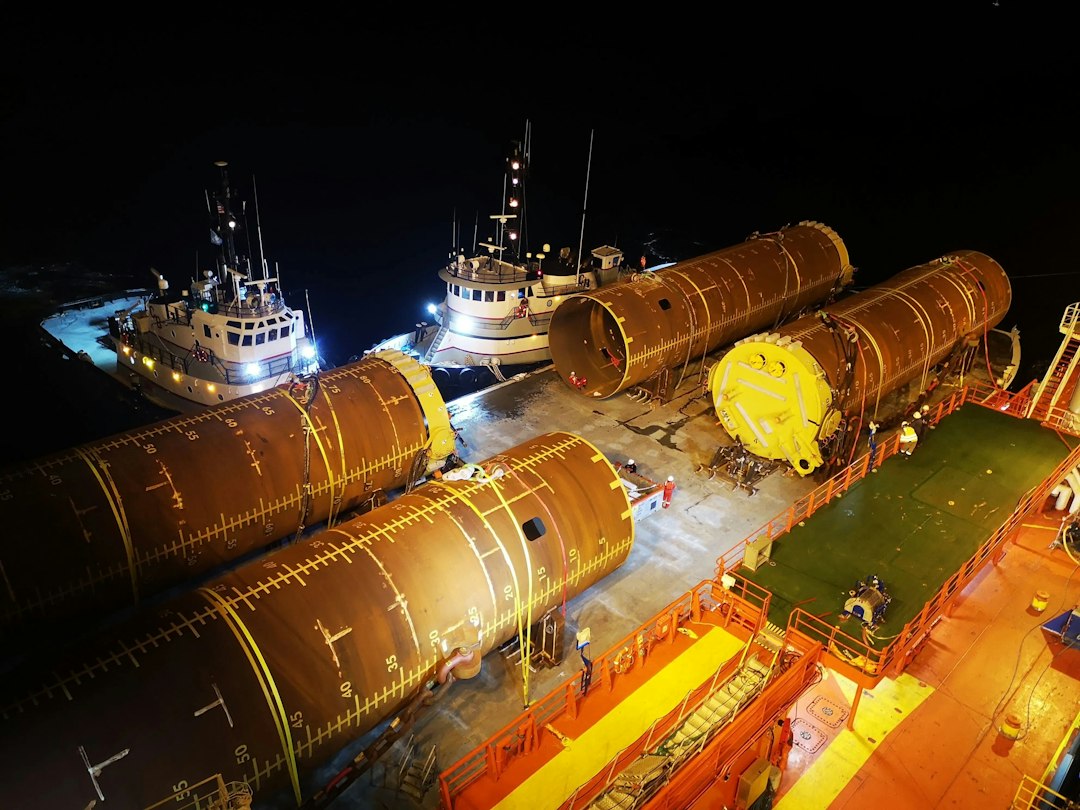
The marine energy industry encompasses hydrocarbon extraction, subsea infrastructure maintenance, and offshore wind power generation. As global demand for reliable energy and cleaner alternatives accelerates, operators across the world are continuously staffing major production platforms, dynamic positioning (DP) vessels, and floating installations.
Whether your background is in mechanical maintenance, precision fabrication, electrical instrumentation, or marine logistics, specialized technical skills are highly sought after. Energy analysts frequently cite the expansion of both deepwater operations and offshore wind projects in leading trade publications like Offshore Magazine. To find the best fit for your background, it helps to understand how day-to-day responsibilities vary across different offshore asset types.
| Asset Type | Primary Operations | Common Entry Roles | Typical Rotation | Core Technical Focus |
|---|---|---|---|---|
| Drilling Rigs (MODUs / Semi-Subs) | Hydrocarbon exploration, deepwater well construction | Roustabout, Floorhand, Painter | 28/28 or 21/21 days | Well control, mud systems, heavy tubular handling |
| Production Platforms & FPSOs | Oil/gas extraction, processing, pipeline export | Utility Tech, Mechanic, Production Tech | 14/14 or 21/21 days | Process isolation, Permit-to-Work (PTW), valve overhaul |
| Offshore Wind Farms | Renewable power generation, grid transmission | WT1 Technician, Rigging Hand | 7/7 or 14/14 days | Nacelle maintenance, high-voltage systems, blade repair |
Oil and Gas Platforms and DP Semi-Submersibles
Mobile Offshore Drilling Units (MODUs), drillships, and semi-submersible rigs remain the primary workhorses for subsea exploration. These massive marine structures utilize computer-controlled thrusters—known as dynamic positioning systems—to maintain station over deepwater wellheads without conventional anchoring.
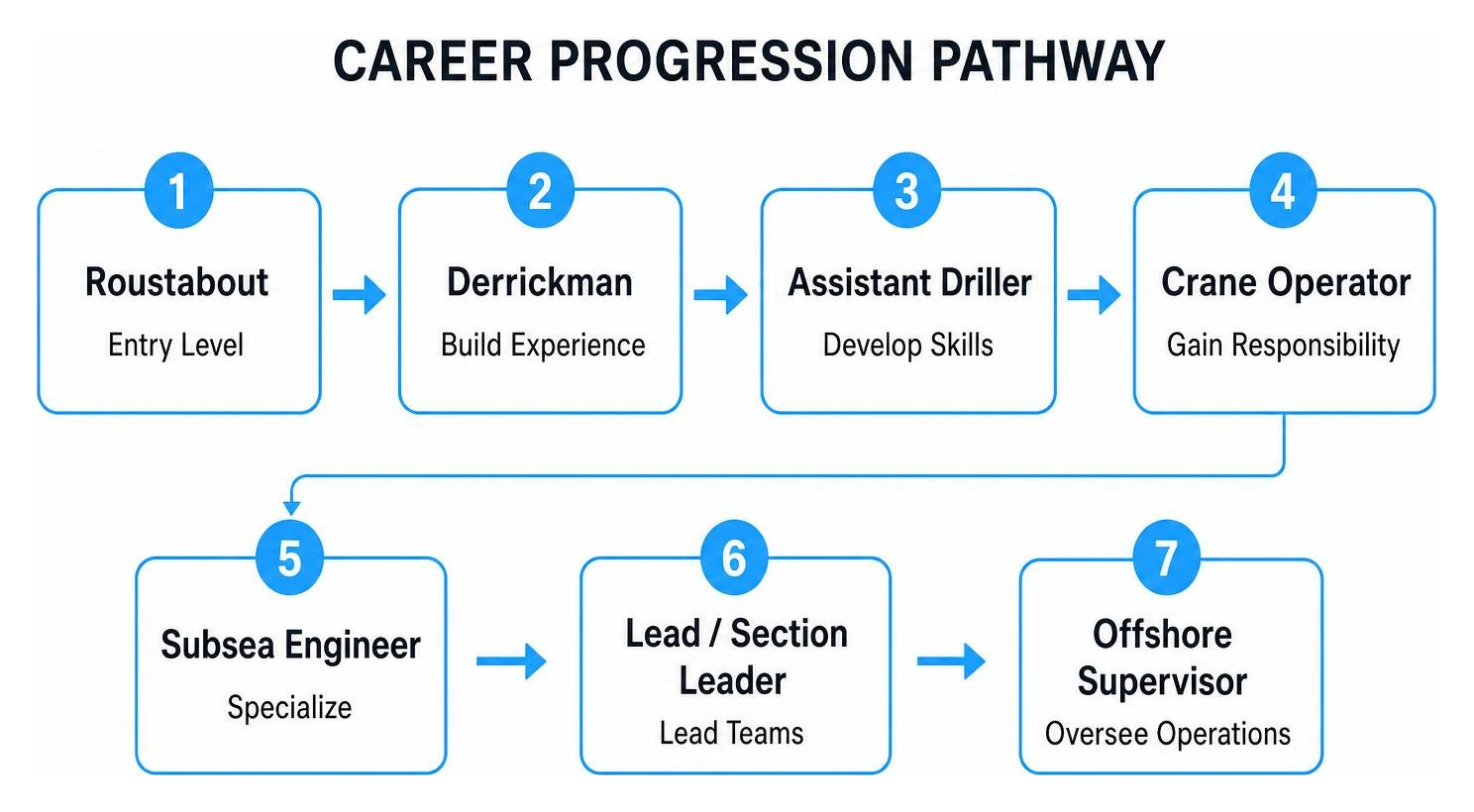
Crew members on these assets carry out drilling operations, manage high-pressure fluid systems, and handle heavy tubular equipment on the drill floor. Starting as an entry-level roustabout or ordinary seaman, workers handle supply loading, deck cleaning, and routine rig maintenance. With experience, crew members can advance to derrickman, assistant driller, crane operator, or subsea engineer.
Beyond active drilling, fixed platforms and floating production facilities require ongoing maintenance, commissioning, and turnaround support. Technicians routinely manage structural fabrication, pipe spool installations, hot-oil pipeline flushing, and hydrostatic testing. Because safety is paramount in hazardous hydrocarbon environments, all maintenance activities operate under strict Permit-to-Work (PTW) protocols. If you are seeking specialized field positions, you can browse a wide selection of active oil and gas rotational jobs across various asset types.
Offshore Wind Farms and Renewable Energy Projects
The global transition toward renewable power has created sustained demand for technicians, engineers, and marine specialists. As detailed in GWEC’s Global Offshore Wind Report, worldwide offshore wind capacity is expanding rapidly, with utility-scale wind farms and floating foundations operating across coastal waters.
Technicians in this sector—often starting as Wind Turbine Technicians (WT1)—travel to offshore turbines aboard specialized Crew Transfer Vessels (CTVs) or Service Operation Vessels (SOVs). Their primary duties involve:
- Performing scheduled mechanical inspections and gearbox servicing inside the turbine nacelle.
- Troubleshooting high-voltage electrical distribution networks, control panels, and SCADA systems.
- Inspecting structural bolt tensioning, yaw systems, and external composite blades at height.
- Supporting offshore substation operations and subsea power export cables.
For trade-qualified electricians and mechanics, offshore wind provides a long-term, sustainable career path with manageable nearshore rotation cycles.
Understanding Rotation Schedules, Day Rates, and Working Conditions

Working offshore requires adapting to a distinct professional rhythm. Technicians live and work on remote marine assets alongside multicultural crews, sharing accommodations and recreational facilities while miles away from shore. A typical workday involves a 12-hour shift, structured around mandatory safety briefings, shift handovers, and continuous field-level hazard assessments.
While living offshore eliminates daily commutes and meal preparation, managing fatigue and maintaining strict hygiene standards are vital. Even domestic routines require discipline; you can review our practical guide on how to survive a housekeeping rotation offshore to see what living in close quarters involves.
Standard Rotation Rosters and Shift Durations
Offshore rotations vary depending on regional labor agreements, operator preferences, and offshore asset types. Common working patterns include:
- 28 Days On / 28 Days Off (28/28): The standard roster for international deepwater campaigns, floating assets, and long-distance assignments. It provides extended consecutive time off for international travel and rest.
- 14 Days On / 14 Days Off (14/14): Common on regional production platforms and shelf facilities, offering a balanced rhythm between field duties and home life.
- 21 Days On / 21 Days Off (3-Week Hitches): A standard contract structure in northern European waters and shelf fields.
- 7 Days On / 7 Days Off (7/7): Frequently used in nearshore wind operations where technicians commute via CTVs and return to shore bases regularly.
Mobilization windows are often tight, with recruiters regularly requiring selected candidates to be field-ready within two to four weeks. To compare various roster structures and compensation models, explore our comprehensive breakdown of oil rig rotation schedules and pay.
Compensation Breakdown, Day Rates, and Retainer Salaries
Offshore compensation reflects the specialized skills, technical risks, and rotational nature of marine operations. Depending on your contract type, earnings are structured through one of several payment models:
- Day-Rate Structures: Freelance and contractor roles are typically paid a flat day rate for each 12-hour shift completed offshore, often supplemented by per diem travel allowances and mobilization bonuses.
- Retainer Salaries Plus Day Allowances: Many specialized service technicians receive a guaranteed annual base retainer salary onshore, which is supplemented with daily uplift allowances whenever mobilized offshore.
- Permanent Salary Packages: Permanent platform and operator roles offer fixed annual salaries accompanied by non-contributory pensions, private medical insurance, and paid rotational leave.
Day rates vary significantly by discipline and seniority. Entry-level deckhands and roustabouts typically earn entry-level daily rates, while experienced tradespeople in senior mechanical technician rotational positions command substantial day rates or high-tier base salaries. In addition, operators generally provide fully funded flights, offshore helicopter transfers, meals, and specialized personal protective equipment (PPE).
Mandatory Qualifications, Medical Clearances, and Safety Training

Before stepping onto a crew transfer vessel or boarding an offshore helicopter, every candidate must hold verifiable safety accreditations and medical clearances. Marine operations have strict zero-tolerance policies regarding uncertified personnel, making these credentials an absolute prerequisite for securing employment. Understanding specialized safety roles in the oil and gas industry can give you clear insight into how modern platforms uphold these rigorous operational standards.
Essential Certifications for Entry-Level Offshore Jobs
For those entering the industry, several core certifications form the baseline for nearly all offshore roles:
- BOSIET with CA-EBS: The Basic Offshore Safety Induction and Emergency Training (with Compressed Air Emergency Breathing System) covers helicopter underwater escape (HUET), fire fighting, and marine survival.
- FOET: The Further Offshore Emergency Training is the mandatory refresher course taken every four years to keep your BOSIET valid.
- OEUK Medical Certificate: An offshore fitness assessment administered by an approved doctor, verifying cardiovascular health, lung capacity, hearing, and vision.
- IADC Rig Pass / SafeGulf: Standard entry-level safety inductions required for drilling rigs and exploration vessels.
- Transportation Worker Identification Credential (TWIC): A security clearance card required for maritime port access and vessel boarding in regulated waters.
- Helideck & Rigging Certifications: Helideck Landing Officer (HLO) or Qualified Rigger tickets are valuable assets for entry-level deck and utility crew members.
Healthcare workers looking to transition their clinical experience into offshore roles can also review our guide on transitioning medical careers to offshore rotations.
Advanced Technical Credentials and Marine Licensures
Senior tradespeople, operators, and engineering specialists require advanced, discipline-specific credentials alongside standard offshore safety tickets:
- CETOPS Hydraulics Qualifications: Essential for hydraulic technicians performing overhaul, commissioning, and high-pressure fluid power servicing.
- Dynamic Positioning (DP) Certification: Mandatory for marine deck officers and dynamic positioning operators managing automated vessel thrusters on semi-submersible rigs.
- Power Engineering & Marine Certificates: A 4th Class Power Engineer certificate or equivalent marine engineering ticket is standard for platform production and utility operators.
- Industrial Trade Accreditations: Proven credentials in reading isometric blueprints, flange bolt-tensioning, structural fabrication, or pipeline hydro-testing. Qualified electricians can explore dedicated opportunities in offshore rotational electrical technician jobs in Malaysia and other major international hubs.
Step-by-Step Process: How to Secure Offshore Roles from Home
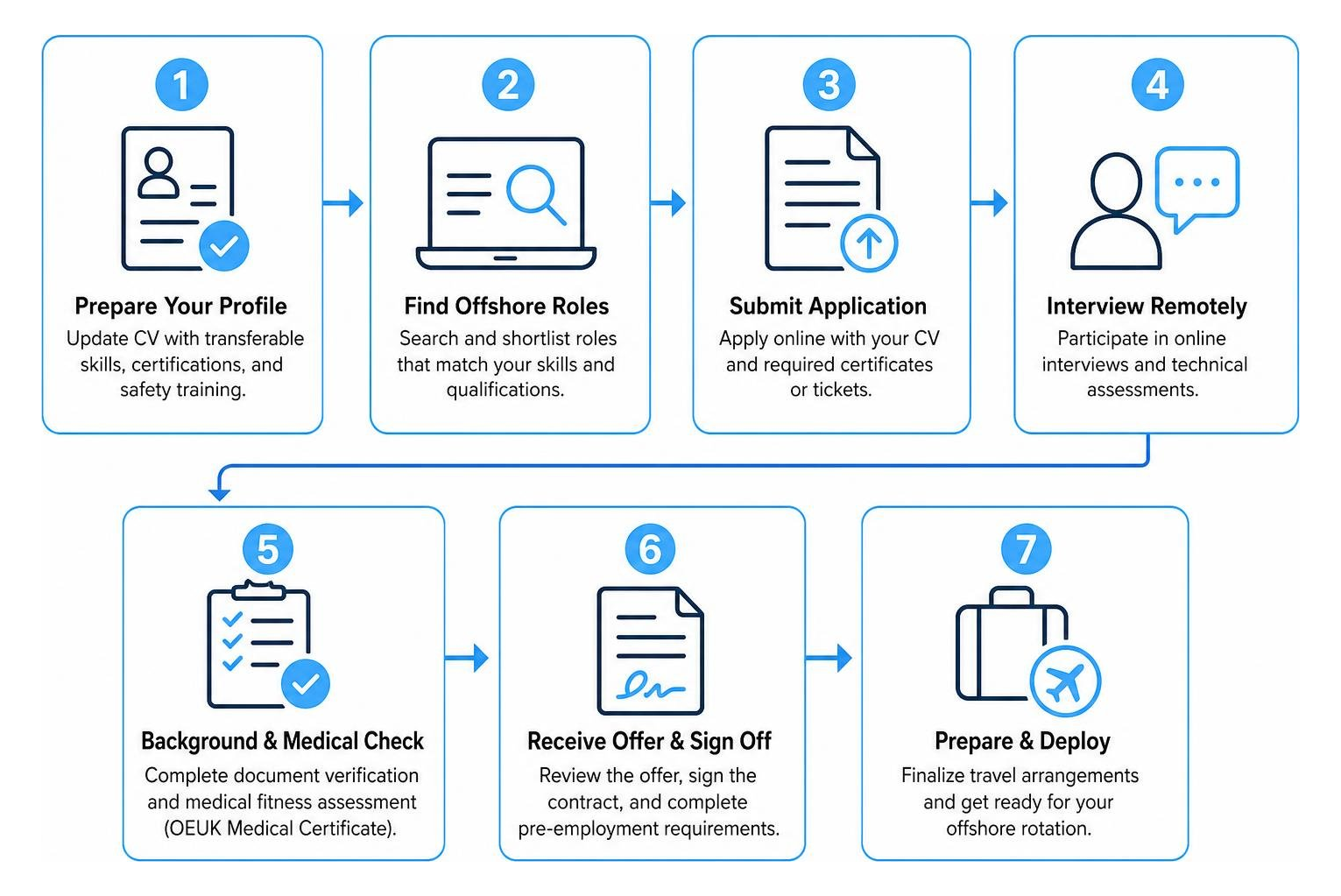
Securing an offshore job without existing maritime connections requires a targeted, structured online application strategy. Rather than submitting generic resumes to dozens of portals, successful candidates systematically position their technical capabilities, trade qualifications, and safety readiness directly in front of crewing coordinators and recruiters.
How to Apply for High-Paying Offshore Jobs Remotely
To build a competitive remote application, follow these key steps:
- Highlight Transferable Onshore Experience: If you are a certified land-based mechanic, pipefitter, high-voltage electrician, or heavy-equipment specialist, structure your CV to emphasize safety adherence, heavy tool management, and work under Permit-to-Work systems.
- Feature Certifications Prominently: Place your BOSIET/FOET expiry dates, OEUK medical clearance, and trade credentials at the very top of your CV so crewing coordinators can immediately verify your field readiness.
- Specify Your Target Roster and Availability: State your rotation availability clearly (e.g., “Available for 28/28 or 14/14 international rotations with 2 weeks’ mobilization notice”).
- Utilize Real-Time Job Boards: Keep track of newly released vacancies on platforms that update continuously. Applying within the first 24 to 48 hours of a posting significantly improves CV visibility.
- Engage Directly with Marine Crewing Agencies: Connect with dedicated offshore crewing managers on professional networks, providing a concise summary of your trade credentials, current location, and immediate availability.
Preparing for Remote Technical Screenings and Background Checks
Because candidates are mobilized from various domestic and international locations, initial interviews and compliance screenings are conducted remotely. Preparing your documentation in advance ensures a smooth onboarding process:
- Virtual Competency Interviews: Expect situational and technical questions regarding equipment troubleshooting, hydraulic schematics, isolation procedures, and behavioral safety interventions.
- Background and Compliance Checks: Operators require clear National Police Checks, Anti-Money Laundering/Counter-Terrorism Financing (AML/CTF) verifications, and professional trade reference checks.
- Drug & Alcohol Screening: Rigorous testing is standard practice. Candidates must pass comprehensive laboratory drug and alcohol screenings prior to travel mobilization.
- Passport & Travel Readiness: Ensure your international passport has at least six to twelve months of remaining validity, along with blank pages for transit visas and port clearances.
Frequently Asked Questions About Offshore Employment
What is the most common rotation schedule for offshore contracts?
The most common rotation pattern for international deepwater projects and floating drilling assets is 28 days on and 28 days off (28/28). In nearshore production fields and regional shelf platforms, 14 days on / 14 days off (14/14) or 21 days on / 21 days off are widely used. Offshore wind technicians supporting turbine operations often work shorter 7-on / 7-off or 14-on / 14-off rotations. During field hitches, crew members work 12-hour shifts daily.
Can beginners secure an entry-level offshore role without maritime experience?
Yes. While offshore experience is valued, beginners regularly secure positions by targeting entry-level roles such as roustabout, ordinary seaman, painter/blaster, catering hand, or utility technician. Candidates who already hold trade credentials (e.g., commercial welding, automotive mechanics, electrical apprenticeships) or onshore heavy-industry experience (such as mining, construction, or manufacturing) have strong transferable skills. Obtaining your BOSIET and OEUK medical independently demonstrates initiative and makes your profile immediately deployable.
What medical tests are required to pass the OEUK fitness standard?
The standard OEUK offshore medical assessment includes:
- Comprehensive cardiovascular evaluation (blood pressure, resting heart rate, and ECG where indicated).
- Audiometry testing to ensure hearing acuity in high-noise industrial environments.
- Spirometry screening to test lung capacity and respiratory health.
- Body Mass Index (BMI) assessment and physical mobility screening (climbing, stooping, and confined space simulation).
- Visual acuity and color blindness tests.
- Laboratory urine analysis, including a standard multi-panel drug and alcohol screen.
Conclusion
A career in the offshore energy sector offers strong compensation, extensive time off between assignments, and opportunities to work on world-class industrial assets. As energy operators continue to develop deepwater fields and expand renewable offshore wind networks, demand for certified technicians, tradespeople, and marine professionals remains steady.
By completing your baseline safety certifications, highlighting transferable technical skills on your CV, and applying systematically through reputable portals, you can launch a rewarding offshore career directly from home. Explore the latest offshore jobs on our platform to find active vacancies and submit your application today.
